What Is Graphic Design?
According to Michael Worthington at CalArts, Graphic Design is a resource for conveying an idea, a product, or a message to the public.
“Graphic Design is all around us! Words and pictures—the building blocks of graphic design—are the elements that carry the majority of the content in both the digital world and the printed world. As graphic design becomes more visible and prevalent in our lives, graphic design as a practice becomes more important in our culture.
“…this course will teach you the fundamental principles of graphic design: imagemaking, typography, composition, working with color and shape… foundational skills that are common in all areas of graphic design practice.”
The CalArts MOOC The Fundamentals of Graphic Design is Free Here: https://www.coursera.org/learn/fundamentals-of-graphic-design/
Things That Are Created Through Graphic Design:

Books – Including Picture Books, Comic Books, Graphic Novels, etc.

Logos

Web Design

T-Shirts

Boxes and Packaging
Posters, CD Labels and Inserts,
“Design is a way of communicating something to someone else through a visual means.” – Michael Worthington
All designers communicate through Text [Typgoraphy] and Image [Illustration], and these two elements are often tied together through color and composition.
The Elements of Graphic Design
Image
Text
Color & Shape
Composition

Imagemaking
Much of Graphic Design Involves Imagemaking.
How an Image is Represented Affects the Message that the Image Communicates.
Some Images Are Recorded Literally and they do not transmit any or at least not much of an abstract idea. An apple that is drawn or painted literally is merely an apple. The materials and the techniques may differ, but the apples are simply apples.

Apple Line Drawing – A Simple, Clean Contour Line Drawing

Apple Gesture Drawing

Apple Shaded Graphite Pencil Drawing

Apple Shaded Color Pencil Drawing

Apple Marker Drawing

Apple Cut Construction Paper Collage

Apple Cut Construction Paper Collage 2

Apple Close Up Watercolor

Apple Acrylic Painting

Apple Core – Still Literal

Apple Watercolor Wash – Less Literal

Apple Design Less Literal

Apple Design – Even Less Literal

Apple Design – Even Less Literal – Computer

Apple Mono Prints


In this assignment I’d like you to experiment with a variety of imagemaking techniques to create a range of images of a single household object. This assignment is graded, and it will also help you towards completing the optional peer review assignment at the end of this week, Brief 1.2: Making Images, Making Meaning.
Choose a household object. Choose something that comes in different varieties, something that isn’t too visually complicated, or too simple, and something that is easily recognizable.
Make at least 10 images of your object. Make each image with different techniques, and in a different way. Make them all approximately the same size, 5 x 5 inches, each in the middle of an 8.5 x 11” or A4 (vertical) sheet of paper. If you make your images by hand, please scan them at 300ppi at 100% of size.
Choose your 10 best images and bundle them into one PDF document for upload. Please submit 10 and only 10.
Please include a title for your assignment, and submit! After submitting, you will be prompted to review two of your peers’ assignments. Good luck!
As mentioned, the goal of this assignment is to encourage you to make images, as many of them as possible (though you are expected to submit 10). The result is for you to expose yourself to as many different types and methods of imagemaking as possible–here you are learning through process.
For peer review, you will be assessed on whether you have met the required number of images (10!) and the degree in which you have incorporated a variety of techniques/approaches/strategies in your set of images. Specifically:
- Did you submit a single document comprised of 10 images? (4 pts)
- To what degree have you incorporated a variety of different techniques and/or approaches in their imagemaking? (4 pts)
To pass this assignment, you must satisfactorily meet the required criteria as above and review two of your classmates.
You are encouraged to make more than 10 images, but please submit only 10!
There’s no right or wrong way to approach this assignment, the goal is to get you making images! You can mix and match techniques, or invent your own techniques and aesthetics. You just need to end up with 10 different images of the same object. Some may take you a few minutes to make, others might take a lot longer. You can use this exercise as a way to investigate new techniques, or revisit familiar ones. If you use this exercise as a way to surprise yourself you’ll probably surprise your audience too!
To create your images, here are some materials you can consider:
- Pencil
- Crayon Charcoal
- Photograph
- Watercolor
- Colored pencil
- Marker
- Collage
- Flat
- Illustrator drawing
- Scanned objects
- Clay
- Chalk
- Sculpture
- Found trash
- Scraperboard
- Lino cut
- Monoprint
- Blind drawing
- Potato print
- 3-d model
- Photoshop manipulation
- Ballpoint pen in one continuous line
Also think about what kind of imagemaking aesthetics or strategies you might employ:
- Any historical design or art movement
- Cartoon
- Realistic
- Surreal
- Symbol/icon
- Impressionistic
- Abstract
- Historical
- Complex
- Minimal
- Cubist
- Decorative


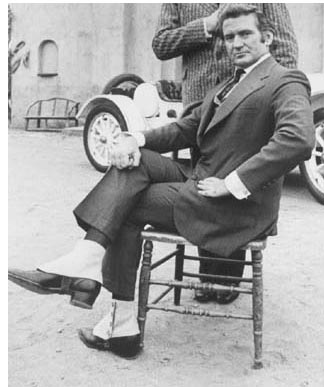
 Fred Astaire


 Bowler Hat
 Bowler Hat Variation
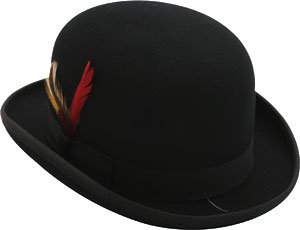 The same type of hat was called a Derby in America



 Art [including artistic costuming] happens after the student has learned a great deal about many different aspects of life and technique. The artist assimilates what he has learned into his own style or his own approach to subject matter. The student who knows how to draw crows will be better equipped to design a crow-like costume than one who does not.


